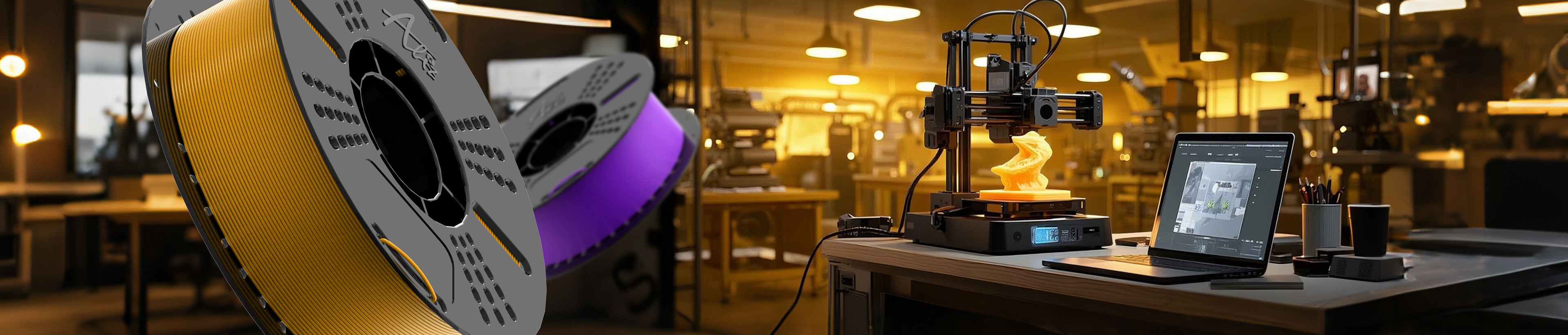
Buyers who search for PETG CF 3D Printing Filament usually want one thing: a strong, stable material they can reorder without surprises. Carbon fiber PETG adds stiffness and a clean matte finish, yet it stays easier to print than many engineering plastics.
Aliz is the 3D printing filament brand of Jiangyin Longshan Synthetic Material Co., Ltd. Longshan has worked in modified plastics for more than 30 years and runs an independent CNAS laboratory. That material background shapes how Aliz develops reinforced filaments.
This guide is written for importers, distributors, brand owners and procurement teams. It explains what PETG-CF is, how it compares with other filaments, what to check before you order, and how OEM/ODM supply works.
What Is PETG-CF 3D Printing Filament?
 PETG CF 3D Printing Filament
is a PETG base resin reinforced with short carbon fibers. PETG (polyethylene terephthalate glycol) is known for good toughness, chemical resistance and low warping. Carbon fiber raises stiffness, improves dimensional stability and hides layer lines.
The result is a rigid, lightweight filament with a matte, carbon-like surface. Many buyers also search for it as
PETG Carbon Fiber 3D Printing Filament or carbon fiber PETG. All three names describe the same material family.
If you are new to the base material, our
PETG 3D printing filament range shows the standard options. PETG-CF sits above them as a functional upgrade for parts that need extra rigidity.
Carbon Fiber PETG Filament: Key Features and Benefits
Carbon fiber changes how PETG behaves in both printing and use. These are the benefits buyers ask about most:
•
Higher rigidity. Parts flex less under load and keep their shape.
•
Better dimensional stability. Reinforced PETG shrinks and warps less, which helps with larger and longer parts.
•
Premium matte surface. Fibers hide layer lines, so parts look finished with little post-processing.
•
Easy processing. It prints at typical PETG temperatures, and most parts do not need an enclosed printer.
•
Good chemical resistance. The PETG base handles oils and common workshop chemicals well.
•
Low weight. Printed parts stay light, which suits drones, robotics and handheld tools.
Why Distributors Add It to Their Range
Carbon fiber PETG fills the gap between standard PETG and nylon-based carbon fiber filaments. End users get a more functional material without moving to a harder-to-print grade. That makes it an easy upgrade product to explain and sell.
PETG-CF vs PETG: What Is the Difference?
Both materials share the same base resin. The difference lies in the carbon fiber, which changes stiffness, surface and printer requirements.
Choose Standard PETG When You Need
• More flexibility and impact absorption
• A glossy finish, or clear and colored parts
• Lower running costs with standard brass nozzles
Choose PETG-CF When You Need
• Stiffer, more dimensionally stable parts
• A matte, premium look with hidden layer lines
• Functional parts such as jigs, brackets and housings
One point deserves honesty: fiber-filled filaments can show slightly lower layer bonding than unfilled PETG. Print orientation matters, so end users should place load-bearing parts with this in mind.
PETG-CF vs PLA-CF vs PA-CF: Which Filament Should You Choose?
The right choice depends on the end use, the printer and the customer's skill level. The table below gives a general comparison of common carbon fiber filaments.
| Factor |
PETG-CF |
PLA-CF |
PA-CF |
| Rigidity |
High |
High, but more brittle |
High to very high |
| Toughness |
Good |
Lower |
High |
| Heat resistance |
Moderate |
Low |
Higher |
| Moisture sensitivity |
Low to moderate |
Low |
High |
| Printing difficulty |
Easy to moderate |
Easy |
Moderate to hard |
| Enclosure |
Usually not required |
Not required |
Often recommended |
| Typical use |
Functional parts, jigs, housings |
Rigid visual prototypes |
Engineering and heat-exposed parts |
For most general functional parts, PETG-CF offers the best balance of strength and ease of use. If your customers need higher heat resistance, a nylon-based filament such as PA-CF is the better fit. Aliz supplies both, so you can build a layered product range from one source.
PETG-CF Filament Specifications (5% and 15% Carbon Fiber)
Aliz lists
PETG-CF5/15, which covers 5% and 15% carbon fiber content. The table summarizes the main specification points buyers check. Please request the latest technical data sheet (TDS) for exact values.
| Item |
Details |
| Base material |
PETG |
| Reinforcement |
Short carbon fiber |
| Carbon fiber content |
5% and 15% options (PETG-CF5/15) |
| Surface finish |
Matte, carbon-like |
| Diameter |
1.75 mm is the most common size. Confirm available sizes and spool weights when you inquire. |
| Color |
Black is typical. Custom colors are available through OEM/ODM. |
| Nozzle requirement |
Hardened steel (abrasive material) |
| Compatible printers |
Most FDM printers with a hardened nozzle |
5% vs 15% Carbon Fiber
•
5% carbon fiber: easier to print, gentler on nozzles, and a moderate gain in stiffness.
•
15% carbon fiber: maximum rigidity and the strongest matte effect, with more nozzle wear. Buyers often search for this grade as
PETG CF15 3D Printing Filament.
Many distributors stock both grades so they can serve hobby users and professional workshops.
Recommended Print Settings for PETG-CF Filament
The values below are typical reference ranges for carbon fiber PETG. Final settings should follow the Aliz TDS and your printer's test results.
| Setting |
Typical reference range |
| Nozzle temperature |
230–260 °C |
| Bed temperature |
70–85 °C |
| Print speed |
40–80 mm/s (higher on high-speed printers) |
| Cooling fan |
30–50% |
| Nozzle |
Hardened steel, 0.4 mm or larger |
| Drying before use |
60–65 °C for 6–8 hours |
Three tips help end users get good results. First, dry the spool before printing. Second, use a clean, well-leveled bed for the first layer. Third, keep retraction moderate to avoid clogs.
Does PETG-CF Filament Need a Hardened Steel Nozzle?
Yes. Carbon fiber is abrasive, and it wears a standard brass nozzle quickly. A hardened steel or similar wear-resistant nozzle keeps the bore size stable and the flow consistent.
A 0.4 mm nozzle works, and a 0.6 mm nozzle clogs less often with the 15% grade. We recommend that distributors print this advice on the packaging or product page. It prevents complaints and returns from customers who use the wrong nozzle.
How to Dry and Store Carbon Fiber PETG Filament
PETG absorbs moisture from the air. Wet filament causes stringing, bubbles and rough surfaces. Simple storage habits prevent most of these problems:
• Keep the filament in its sealed bag with desiccant until use.
• Dry it at 60–65 °C for 6–8 hours if it has been open for a long time.
• Store opened spools in a dry box or a resealable bag.
• Avoid heat, direct sunlight and humid warehouses.
Good storage also matters in your own warehouse. Export shipments can spend weeks in transit, so sealed, vacuum-style packing is a sensible requirement for any bulk order.
Best Applications for PETG-CF Filament
 PETG CF 3D Printing Filament
suits parts that must stay rigid, look clean and resist everyday chemicals. Common uses include:
• Jigs, fixtures and assembly tools for factory floors
• Drone frames, RC parts and lightweight mounts
• Robotics brackets and structural prototypes
• Equipment housings and covers
• Automotive interior prototypes and test fittings
• Premium consumer product prototypes
For engineering companies, 3D printed fixtures reduce lead time compared with machined parts. For brand owners, the matte carbon look adds visual value to a finished product.
Which 3D Printers Are Compatible with PETG-CF?
Most FDM printers that run 1.75 mm filament can print PETG-CF, as long as the hotend is hardened and reaches at least 260 °C. Both open-frame and enclosed printers work. Direct-drive extruders generally feed the material more reliably than long Bowden setups.
Buyers should also remind end users that abrasive filament can wear PTFE tubes and feeder gears over time. A quick check of these parts keeps print quality stable.
Why Choose Aliz as Your PETG-CF Filament Supplier?
Aliz focuses only on 3D printing consumables. It is backed by Longshan Synthetic, a Chinese high-tech enterprise in modified plastics for over 30 years and a National SRDI "small giant" enterprise. These are the points that matter to buyers:
•
Material expertise. Longshan's modified plastics experience supports stable formulations.
•
Independent CNAS laboratory for material testing.
•
Wide filament range. PLA, PETG, PA, TPU, ABS, ASA, PPS and carbon fiber filaments from one supplier.
•
Consistent diameter and flow, which reduces printing complaints.
•
Flexible service. OEM/ODM, custom colors, custom formulations and bulk supply worldwide.
Longshan's products and services already cover Asia, Europe and North America, serving more than 900 industrial enterprises. You can read more on our
Why Choose Us page.
OEM/ODM PETG-CF Filament: Custom Colors, Formulas and Packaging
Many buyers want to sell under their own brand. Aliz supports this through its
OEM/ODM service. You can adjust the product to your market instead of choosing only from a fixed catalog.
What You Can Customize
•
Colors: match your brand palette or product line.
•
Formulation: discuss carbon fiber content and performance targets.
•
Spool and label: private label, spool type and weight.
•
Packaging: boxes, bags and carton design for your channel.
Beyond carbon fiber, Aliz works across the PETG family. If you also need
PETG Metallic 3D Printing Filament,
PETG Clear 3D Printing Filament or
PETG Translucent 3D Printing Filament, ask about availability and customization together with your PETG-CF inquiry. A broader
PETG 3D Printing Filament range makes it easier to serve different customers with one supplier.
A Simple OEM/ODM Process
1. Send your target material, color, quantity and market.
2. Aliz reviews feasibility and suggests a formulation or sample plan.
3. Test the samples on your own printers.
4. Confirm packaging and quantity, then move to bulk production.
Bulk and Wholesale PETG-CF Filament Supply Worldwide
Aliz supports bulk supply for importers, distributors, wholesalers and project buyers in international markets. Before placing a first order, use this checklist with any supplier:
• Request a TDS and, where needed, a test report for each grade.
• Order samples and test them on your typical printers.
• Confirm batch consistency: diameter, color and carbon fiber content.
• Check packaging for moisture protection and export transport.
• Agree on lead time, order quantity and payment terms in writing.
• Ask about technical support for your sales team and end users.
Clear answers to these points reduce risk and build a base for long-term cooperation.
Quality Control and Testing for Our Carbon Fiber PETG Filament
Reinforced filament is harder to make consistently than plain PETG. Carbon fiber must spread evenly in the resin, or the printer will clog and the surface will look uneven.
Aliz builds on Longshan's material science background and independent CNAS laboratory. In practice, buyers should look at these quality points:
• Stable filament diameter and roundness
• Even fiber dispersion and smooth extrusion
• Low moisture content at packing
• Color consistency from batch to batch
Ask Aliz for the current test data and documents that fit your market. Share your quality requirements early so they can be matched to your order.
PETG-CF Filament FAQ and Request a Quote
What is PETG CF 3D printing filament?
It is PETG filament reinforced with carbon fiber. It prints more rigid and stable than standard PETG and has a matte surface.
Do I need a hardened steel nozzle?
Yes. Carbon fiber is abrasive and wears brass nozzles quickly. Use a hardened steel or wear-resistant nozzle.
What is the difference between 5% and 15% carbon fiber?
The 5% grade is easier to print and gentler on nozzles. The 15% grade gives higher rigidity and a stronger matte effect, but wears nozzles faster.
Is PETG-CF stronger than standard PETG?
It is stiffer and more dimensionally stable. Layer bonding can be slightly lower, so print orientation matters for load-bearing parts.
Can Aliz customize color, formulation and packaging?
Yes. Aliz offers OEM/ODM service, including custom colors, formulations and packaging. Contact the team with your requirements to confirm feasibility.
What should I include in a quotation request?
Please send the grade (5% or 15%), diameter, spool weight, color, quantity, packaging needs, destination country and target application. This helps Aliz reply quickly and accurately.
Conclusion
PETG CF 3D Printing Filament gives your customers rigid, lightweight and good-looking functional parts without the difficulty of high-temperature materials. For distributors and brand owners, the key is a supplier with stable quality, flexible customization and clear technical support.
If you would like product details, a quotation, samples or technical support for PETG-CF, please
contact the Aliz team. Tell us your market and requirements, and we will help you plan the right PETG-CF solution.